Local and national experts representing a wide range of stakeholders gathered on the Rutgers University-New Brunswick campus for the conference, “Sustaining Innovation in New Jersey Climate Policy – Past, Present and Future,” on March 21.
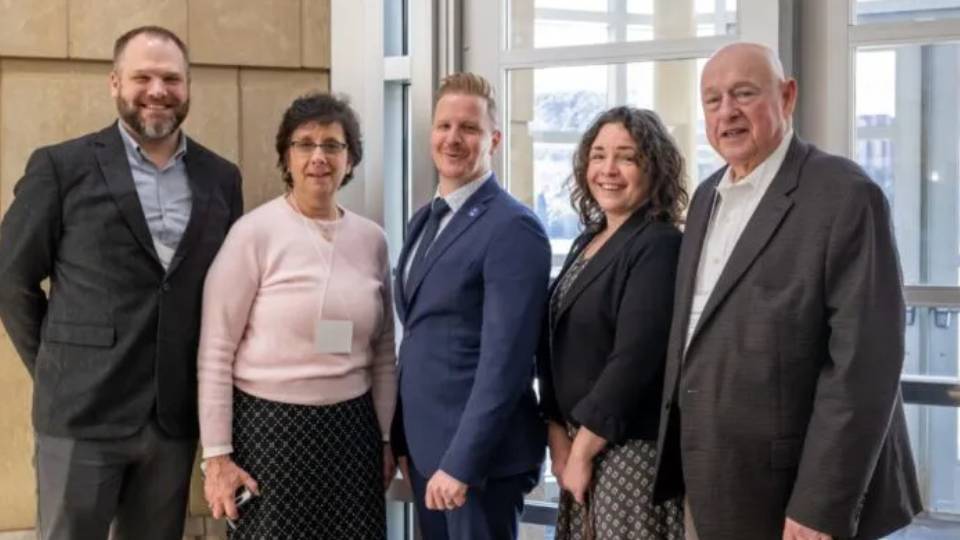
Local and national experts representing a wide range of stakeholders gathered on the Rutgers University-New Brunswick campus for the conference, “Sustaining Innovation in New Jersey Climate Policy – Past, Present and Future,” on March 21.

Companies winning contracts with state agencies are required to provide disclosure forms showing ownership structures for those with a 10% stake or higher, said Marc Pfeiffer, a senior policy fellow and faculty researcher at Rutgers University’s Center for Urban Policy Research.

Pfeiffer also pointed out this is something that every state has to deal with and should be “very cautious in the assumptions they make about new revenues and cautious with the assumptions they make on what they do with federally funded programs.”

“In New Jersey, we have a single way of raising money, which is property taxes,” Pfeiffer said of municipal budgets. “Atlantic City has always been an exception to that because you have the hotels and then the casinos. You’ve always had a policy of state engagement to support Atlantic City’s municipal budget in particular.”

“If it gets lifted to $20,000, that’s really going to be inclusive to a lot more places,” said Marc Pfeiffer, a senior policy fellow at Rutgers University’s Bloustein School of Planning and Public Policy, who studies local government in New Jersey

Rutgers Today, February 18, 2025 Rutgers policy expert Marc Pfeiffer discusses the decline of print, the rise of digital media, and what it means...

Municipalities should have a sense of the technology’s costs (financial, societal, and reputational) versus its benefits. Financial costs include staff management time and storage fees; they will rise with the volume of data stored. Societal and reputational costs may come into play when deciding what physical locations warrant surveillance and if the technology is obvious or invisible to those affected by it.
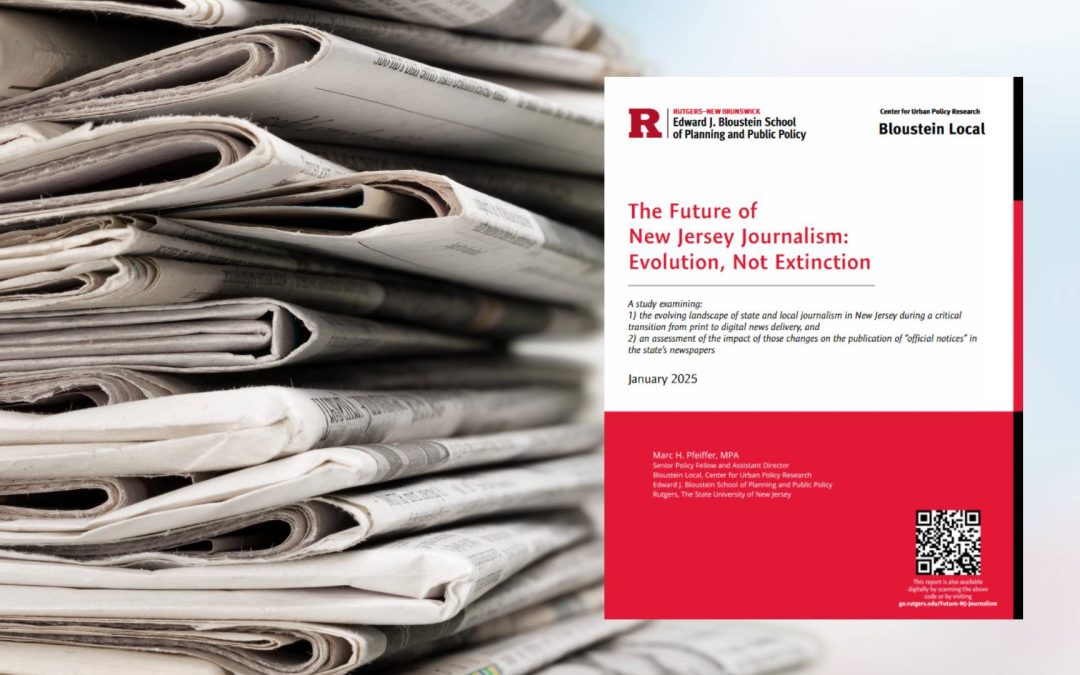
Earlier this month, I completed a report titled “The Future of New Jersey Journalism: Evolution, Not Extinction,” and it was recently released by the Center for Urban Policy Research at Rutgers’ Bloustein School of Planning and Public Policy. In it, I discussed the current environment facing New Jersey journalism, and recommendations on how it can thrive. I also analyzed the current debate about advertising legal notices in newspapers.

“In person meetings have a value, they provide upfront interaction with the people they represent. It allows more direct participation and provides nuance that can’t be seen or observed or happen when you are on a webinar,” said Marc Pfeiffer, a senior policy fellow at the Bloustein Local Government Center for Urban Policy Research at Rutgers University. “In person requires a little more formality. It requires a better sense of decorum, which is representative of the official nature of what is going on.”

“In person meetings have a value, they provide upfront interaction with the people they represent. It allows more direct participation and provides nuance that can’t be seen or observed or happen when you are on a webinar,” said Marc Pfeiffer, a senior policy fellow at the Bloustein Local Government Center for Urban Policy Research at Rutgers University. “In person requires a little more formality. It requires a better sense of decorum, which is representative of the official nature of what is going on.”
Local Fiscal Impact Calculator Demographic Multipliers (application) Overview and User Guide Database of 50 States Who Lives in America's Housing? Fifty State Demographic Multipliers Elizabeth Air Quality Dashboard Dashboard Community Bulletin Board Green Building...
This two-part study examines the evolving landscape of state and local journalism in New Jersey during a critical transition from print to digital news delivery and challenges those changes mean for the publication of "official notices." The analysis, drawing on five...
This second part of The Future of New Jersey Journalism: Evolution, Not Extinction examines the evolving landscape of legal advertising requirements in New Jersey amid significant changes in media publishing models. The impending cessation of print operations by New...
The prevalence of low-density residential development to host solar PV, the ubiquity of solar irradiation, and incentivizing policies have created substantial opportunities for homeowners in the United States. Federal, state, and municipal governments implement...