News & Events
Undergraduate Profiles Water Column for NJDEP Project
This summer, Rutgers undergraduate student Laura Wiltsee, advised by Dr. Josh Kohut, worked with the New Jersey Department of Environmental Protection to produce a profile of the water column at different sites along the Raritan River, as marked on the map (click to view full map). The profiles of the temperature and salinity shown on this page are for...
Students Collect NJDEP Qualified Data on R/V Rutgers
A new research vessel, R/V Rutgers, has given undergraduate and graduate students from a variety of academic programs at Rutgers the opportunity to get out on the water and learn valuable data collection methods from members of the New Jersey Department of Environmental Protection (NJDEP). Throughout the months of April, May, and July, Dr. Josh Kohut,...
Students Gain Watershed Management Experience Through Raritan Scholars Project
The Raritan Scholars program provides Rutgers students with internships related to watershed management in the Raritan River watershed. The program was originally proposed in 2013 by Dr. Judy Shaw, who then worked for the Bloustein School and coordinated the Sustainable Raritan River Initiative (SRRI). The course has been taught by Dr. Daniel Van Abs, a...
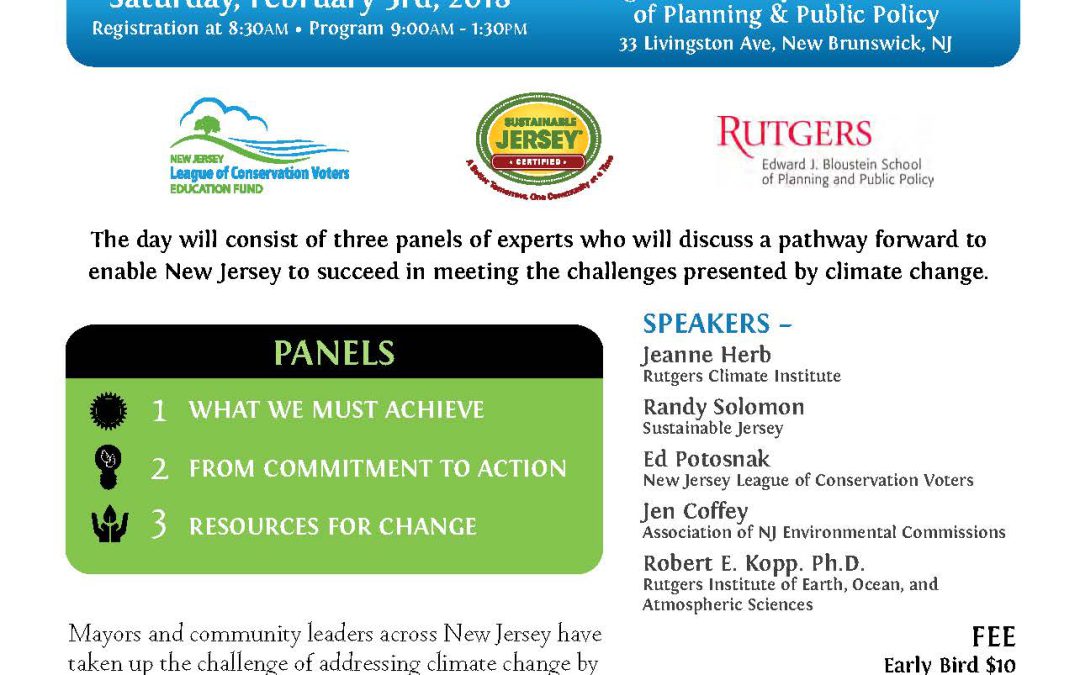
Bloustein School Co-sponsors Sustainable Jersey Mayors Climate Summit – February 3
Bloustein School co-sponsors Sustainable Jersey Mayors Climate summit. February 3, 2018. Read more or register: http://www.sustainablejersey.com/nc/events-trainings/?tx_cicevents_eventslisting%5Bevent%5D=831&tx_cicevents_eventslisting%5Baction%5D=detail&tx_cicevents_eventslisting%5Bcontroller%5D=Event&cHash=875b9c853f108670922d2e9c966ec0a8
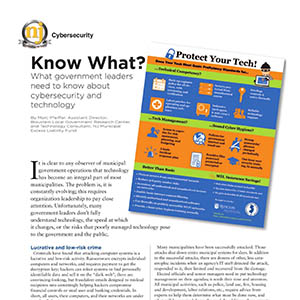
What government leaders need to know about cybersecurity and technology
Marc Pfeiffer, Assistant Director of the Bloustein Local Government Research Center and a technology consultant for the New Jersey Municipal Excess Liability Fund, has a featured article in the November 2017 issue of New Jersey Municipalities magazine, "Know What? What Government Leaders Need to Know About Cybersecurity and Technology." The article...
Flourometer Model: Turner
A fluorometer is used to estimate the amount of phytoplankton (plant-like, microscopic organisms) in the water. This is typically done by measuring the primary photosynthetic pigment in phytoplankton called chlorophyll a. Why we collect this data Phytoplankton are primary producers as well as the base of the food chain. By collecting information about the...
ADCP Model: Workhorse Monitor ADCP
An acoustic Doppler current profiler uses acoustics (sound waves) to measure the velocity of the water around it. Why we collect this data The ADCP gives us insight into how the water moves. It can also provide some information on the amount of particles in the water. How it works An ADCP works like a radar gun that law enforcement use to measure the speed...
Water Quality Meter Model: YSI ProDSS
A water quality meter directly measures many different characteristics of the water using different sensors. The R/V Rutgers has sensor that measure conductivity, temperature, dissolved oxygen, and pH. Why we collect this data These measurements provide us with basic information about the ecosystem, including health and habitability, as well as providing...
CTD Model: CastAway
A CTD is so named as it measures conductivity, temperature and depth. Why we collect this data These measurements provide us with basic information about the ecosystem as well as providing insight into the source of the water (freshwater from runoff or saltier water from tides). The conductivity, temperature, and pressure (depth) can also be used to...
CTD Model: Sea-Bird
A CTD is so named as it measures conductivity, temperature and depth. This particular model aboard the R/V Rutgers also has sensors that measure turbidity and chlorophyll a. Why we collect this data These measurements provide us with basic information about the ecosystem as well as providing insight into the source of the water (freshwater from runoff or...
Recent Products
Powers of Division: “Smart” Spaces as Controlling Workplace Activity Fragmentation
In this article we argue that “smart” work spaces are created through access to wireless networks and mobile cloud computing collaboration software. Yet the power relations embedded in these overlapping physical and cyberspaces function to control the spatial and...
Improving Air Quality in Your Home
Indoor air quality, or IAQ, is the quality of the air around you, including the air within and around the buildings and structures where you live, work and visit. IAQ is an important determinant of health and comfort. Because we spend most of our time indoors (e.g.,...
State of the Raritan Report, Volume 2
Rutgers University’s Sustainable Raritan River Initiative has released a second report on the status of watershed health for the Raritan River. The State of the Raritan Report, Volume 2 continues efforts to update key indicators of water quality and watershed health...
Improving Air Quality: A Guide for Property Owners
Ensuring good air quality is essential to creating living environments that support healthy, comfortable and productive building occupants. Improving air quality need not be a major financial burden for either property owners or tenants, and the benefits of ensuring...