Rutgers Raritan River Consortium (R3C) minigrant funds allowed the expansion of fish passage analysis on the Raritan by hiring Kiera Malone, a...
smalone
Assessing Forest Status in the Lower Raritan Watershed
Forest fragmentation is a process by which large forest areas are broken into smaller forest areas. Fragmentation is often a result of human...
Student engagement on microplastics in the Raritan River
Students from Dr. Jill Lipoti and Mary Nucci's environmental studies practicum formed a team to investigate microplastics in the Raritan. They...
Join Jeanne Herb at annual Restore America’s Estuaries Summit in Long Beach
Join EAC Executive Director, Jeanne Herb, at the annual Restore America's Estuaries Summit, December 8-13 in Long Beach, California. Follow this...
State Sea Level Rise Policies
Jeanne Herb, EAC Executive Director, joined Rutgers Climate Institute Associate Director Dr. Marjorie Kaplan in presenting insights regarding state...
Social Vulnerability in New Jersey’s Coastal Zone
EAC Executive Director Jeanne Herb, along with Senior Research Specialists Matt Campo and Dr. Jennifer Whytlaw, presented an analysis of social...
EAC reviews environment and climate change indicators to support healthy community planning
With support from the County Health Rankings and Roadmaps, a program of the Robert Wood Johnson Foundation hosted by the University of Wisconsin,...
New Jersey Climate Adaptation Alliance wins Coastal and Ocean Champion Award
Congratulations to the New Jersey Climate Adaptation Alliance for winning the Coastal and Ocean Champion Award from the Monmouth University Urban...
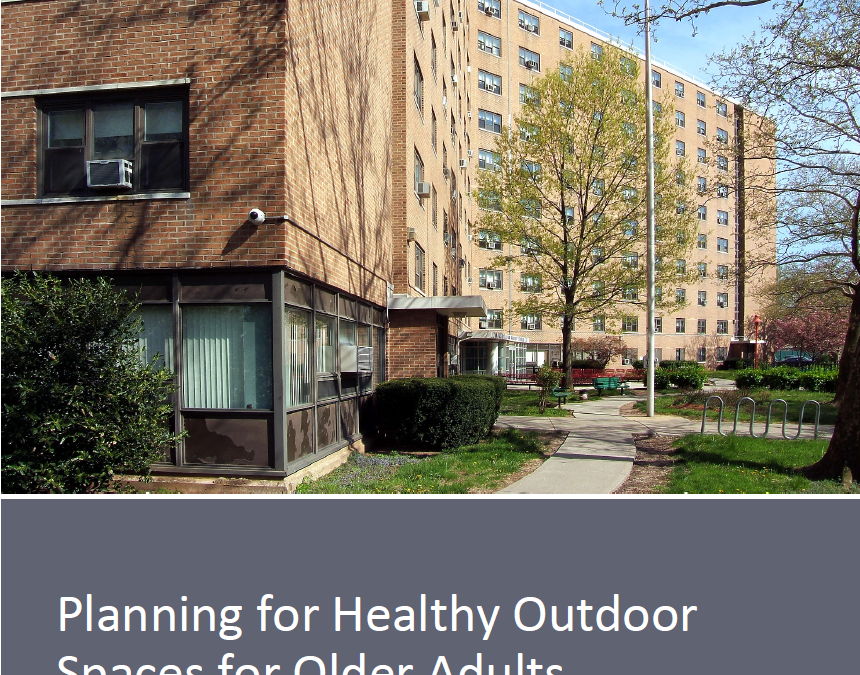
EAC’s Dr. Lowrie to lead Age-Friendly Planning Studio focused on Farley Towers in Elizabeth
In the Fall of 2018, EAC's Dr. Karen Lowrie is leading a class of MCRP students in a studio class that focuses on Farley Towers, a senior living...
EAC Team to help integrate coastal hazards mapping tools into unified platform
EAC team members will work on an interdisciplinary team at Rutgers to integrate an existing suite of coastal hazards mapping tools into a unified...
Recent Products
Transition Plan for the Return of Local Control to Jersey City Public Schools, Third Annual Report
This report is the third and potentially final report of the Department of Education’s (department) Comprehensive Accountability Office (CAO) concerning the final phase of the transition of the Jersey City Public Schools (district) from being a state supervised school...
Behaving or not? Explaining energy conservation via identity, values, and awareness in U.S. suburban homes
In this study, we compare electricity consumption of the suburban households with similar socio-economic, demographic, and geographic profiles to assess possible roles of social-psychological and behavioral factors. We examine the extent to which these factors...
AI in Planning: Opportunities and Challenges and How to Prepare
Artificial intelligence (AI) has been in development since the 1950s. However, due to the availability of big data and increased computing power, the AI market has grown substantially over the last decade and is expected to grow more than 20 percent annually over the...
Planning the Built Environment and Land Use Towards Deep Decarbonization of the United States
Many governments, businesses, and institutions are committing to net zero greenhouse gas emissions by 2050, a goal and process known as deep decarbonization. Achieving this goal in the United States requires a national, economy-wide transformation in energy production...