News & Events
Coastal Sediment Archives Can Guide Resilience Planning
Coastal wetlands are beneficial to our natural and human ecosystems. They are incredibly important during intense weather events, like hurricanes, because they act as buffers and slow winds and storm surges down, lessening the impact to the nearby built environments. In many areas, including New Jersey, coastal wetlands are eroding rapidly. Dr. Jennifer L....
Dr. Ken Mitchell Describes History of Raritan Flooding at Annual Conference
The Raritan River Basin has a long history of flooding events. Communities along the river have documented high water over the past three centuries. With an expansive watershed, the Raritan's floodplain stretches over an area of 94,000 acres. Due to a history of agriculture, industrialization and urbanization, approximately thirteen percent of the...
Questionnaire Provides New Jersey Communities with Resilience Evaluation Tool
Many communities in New Jersey are facing problems from flooding whether or not they are along the coast. The New Jersey Department of Environmental Protection’s Coastal Management Office developed an online questionnaire for any New Jersey municipality to use called Getting To Resilience (GTR). The purpose of this tool is to assist municipal and county...
Dr. Robert Chant Researches Raritan River Estuary Sediment Transport
Dr. Robert Chant, a professor of Marine and Coastal Sciences at Rutgers School of Environmental and Biological Sciences, is researching sediment and contaminant transport in the Raritan River Estuary. The import and export of sediment in the Raritan River Estuary varies in relation to the tide. Heavier tidal changes lead to the import of sediment while...
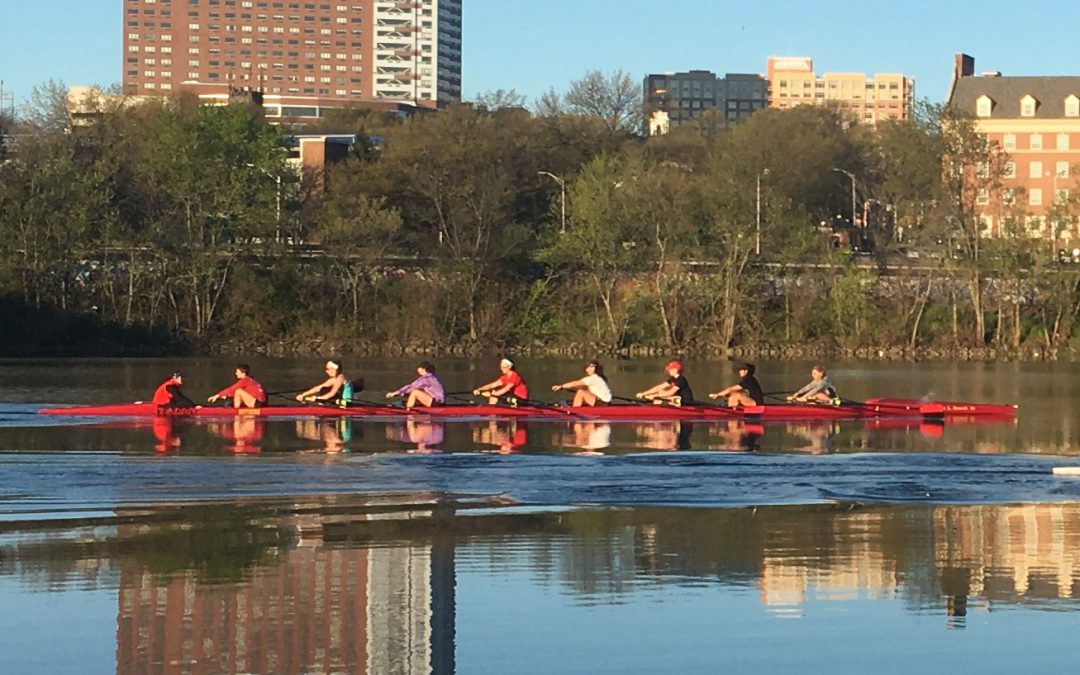
8th Annual Sustainable Raritan River Conference
RU on the Raritan Conference Exploring an agenda for Rutgers’ stewardship of the Raritan River, basin and bay Friday, June 10, 2016, Douglass Student Center, New Brunswick, NJ 8th Annual Sustainable Raritan River Conference In celebration of Rutgers University’s 250th Anniversary, the conference showcased efforts of Rutgers’ faculty, staff and students,...
Preparing for the Impacts of a Changing Climate on Public Health in New Jersey: A Workshop for Public Health Practitioners in New Jersey
Join us for a half day workshop on June 3, 2016 to learn about how a changing climate may affect public health in New Jersey and about strategies to better prepare New Jersey’s public health practitioners and professionals to address these impacts. The workshop will provide an overview of how a changing climate may affect human health, the latest research...
RU on the Raritan Conference – 8th Annual Conference and Awards Ceremony
RU on the Raritan Conference Exploring an agenda for Rutgers’ stewardship of the Raritan River, basin and bay Friday, June 10, 2016, Douglass Student Center, New Brunswick, NJ 8th Annual Sustainable Raritan River Conference In celebration of Rutgers University's 250th Anniversary, the conference showcased efforts of Rutgers' faculty, staff and...
Two States: One Bay Conference Summary is Available
The Two States: One Bay conference, convened on June 12, 2015 by the Sustainable Raritan River Initiative and the New York-New Jersey Harbor & Estuary Program, brought together more than 200 representatives from federal, state and local governments, educational institutions, non-profit organizations, and businesses to focus on Raritan Bay. During...
Herb and Lathrop to Co-Lead the Sustainable Raritan River Initiative
Dr. Richard Lathrop from the School of Environmental and Biological Sciences and Jeanne Herb from the Edward J. Bloustein School of Planning and Public Policy have been named co‑leaders of the Sustainable Raritan River Initiative, which is a joint program of the two schools. A professor in the Department of Ecology, Evolution and Natural Resources, Dr....
Fixing Flooding: One Community at a Time Workshop
The Sustainable Raritan River Initiative is co-sponsored this workshop on flooding and green infrastructure. The purpose of the program was to educate and engage stakeholders in addressing the impacts of stormwater runoff from impervious cover. The workshop acknowledged on-going efforts by members of the Sustainable Raritan River Collaborative and...
Recent Products
Using synthetic population data for prospective modeling of occupant behavior during design
This paper addresses the challenge of incorporating occupant behavior into building performance simulation models used during the design process—that is, before the actual occupants are known. It proposes the use of synthetic population data, an approach that is novel...
Non-Consumptive Recreational Use Survey Results
The objective of this analysis was to understand non-consumptive recreational uses in the Mid- Atlantic Region and to identify specific conflicts identified by users as well as to highlight topics of interest to the same groups. The Mid-Atlantic Region includes New...
Planning for Healthy Communities
Understanding Apartment End Use Water Consumption in Two Green Residential Multistory Buildings
The objective of this study was to gain a better understanding of the drivers of indoor water consumption in urban multistory residential buildings, to more accurately predict residential water demand, and to identify water saving opportunities. Water meters were...