EAC staff are collaborating with others at Rutgers and the New Jersey Department of Environmental Protection to develop data, guidance and policy...
smalone
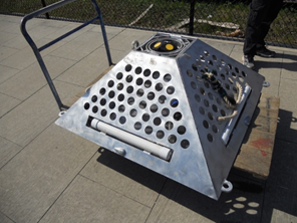
Real-Time Hydrological Observatory and ERDDAP Interface
A real-time water quality monitoring station has been deployed on the bottom of the Raritan River in the mid-channel in front of the Rutgers Class...
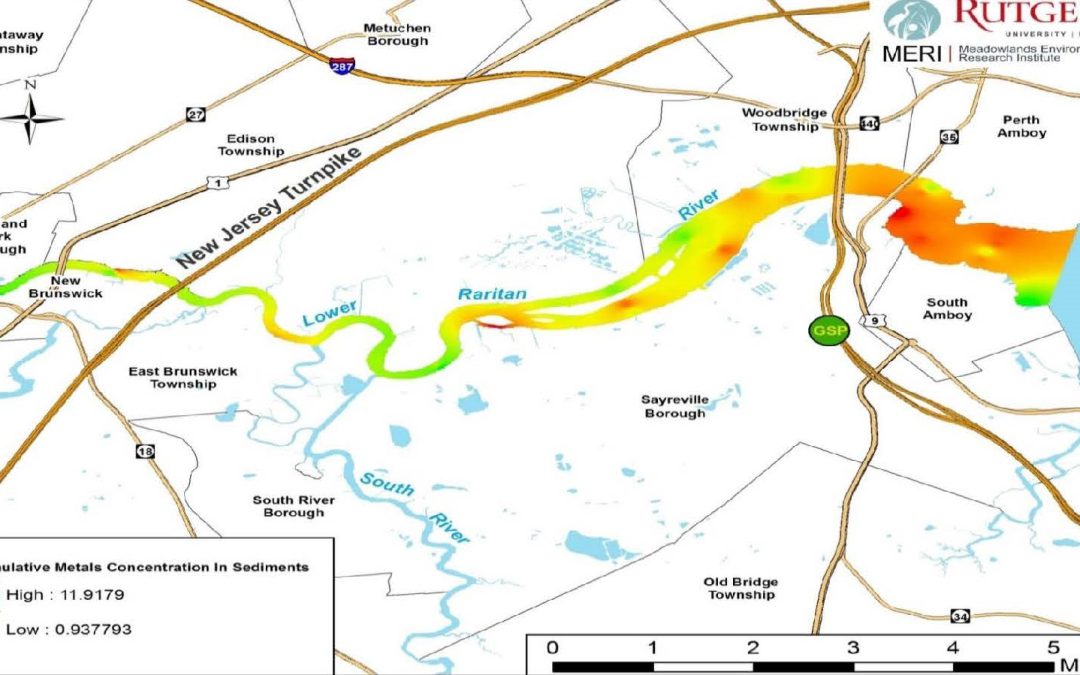
MERI – Spatial Distribution of Contaminants in Lower Raritan Sediments
This research study by the Meadowlands Environmental Research Institute (MERI) at Rutgers - Newark, aimed to fill in data gaps in river and marsh...
EAC Director Jeanne Herb joins in the Univ. of Pennsylvania Wharton School’s Digital Dialogue about improving disaster recovery of low income households
Join EAC Director Jeanne Herb in a Digital Dialogue about improving disaster recovery of low income households through The Wharton School,...
ArcGIS StoryMaps of Key Raritan Indicators
Key Raritan Indicators described through ArcGIS StoryMaps by Advanced Environmental Geomatics Students In the Spring of 2019, undergraduate students...
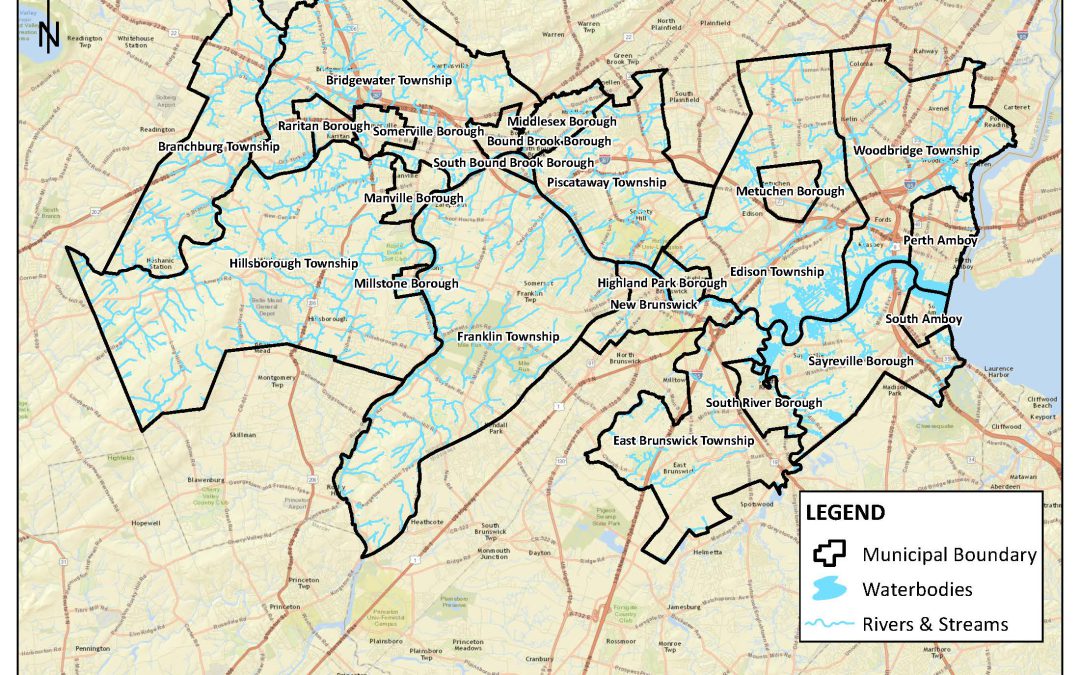
EPA Rutgers Raritan Data Project
The EPA Rutgers Raritan River Project was conducted to compile data related to point source and non-point source pollution and Superfund, Brownfield...
EAC director Jeanne Herb to participate in new project designed to develop an interactive shellfish aquaculture siting tool for New Jersey
Jeanne Herb, Executive Director of the Bloustein School's Environmental Analysis and Communications Group, will be working with Rutgers scientists...
EAC team produces report on health impacts of New Jersey’s draft Energy Master Plan
Rutgers scholars have been at the forefront of promoting Health in All Policies (HiAP) as a collaborative approach to reducing disparities and...
EAC Staff Develops Indicators of Health Inequities in New Jersey
With support from the Robert Wood Johnson Foundation Culture of Health Leaders program, EAC staff are working to develop a set of health inequity...
Ten Mini-Grants Awarded for Research on the Raritan River, Basin and Bay
The Rutgers Raritan River Consortium (R3C) has awarded ten mini-grants to support research by Rutgers faculty, staff and post-doctoral researchers...
Recent Products
New Jersey’s Energy-Efficiency Workforce Needs, Infrastructure, and Equity Assessment
Governor Phil Murphy’s Executive Order 315 in 2023 set a goal of ensuring 100% of energy sold in New Jersey comes from clean sources by 2035, and implementing strategic recommendations in the New Jersey Council on the Green Economy’s report Green Jobs for a...
Stakeholder and Subject Matter Expert Feedback Regarding the Content of a New Jersey Ocean Acidification Action Plan
This report summarizes stakeholder and subject matter expert feedback regarding the potential elements and content of a New Jersey Ocean Acidification (OA) Action Plan. Feedback was provided by twenty-eight individuals through a stakeholder engagement process which...
The traffic calming effect of delineated bicycle lanes
We analyze the effect of a bicycle lane on traffic speeds. Computer vision techniques are used to detect and classify the speed and trajectory of over 9,000 motor-vehicles at an intersection that was part of a pilot demonstration in which a bicycle lane was...
AI in Local Government, Helpful or Harmful?
Chatbots are software programs that use natural language processing to have conversations with people. Also called conversational agents, they can answer questions, provide recommendations, and complete tasks. Leading companies like Google, Microsoft, and Amazon, and...